The hardest problems ALWAYS require creative solutions.
At THiNK•GMS we start by refining your organization's question, because the one you arrive with isn't always the one you need answered. Then we research. Then we apply creative thinking to the problems. Finally, we build a system for you that fits the question we refined together. Wash, rinse, repeat.
For Corporations · For Government Agencies · For Nonprofits
Explore ↓
Working the Pacific Northwest since December 01, 2010 — by way of Los Angeles, where our Senior Managing Partner has worked in media, advertising & entertainment since 2001.
Vancouver, WA · Portland, OR · Est. in the craft 25 years
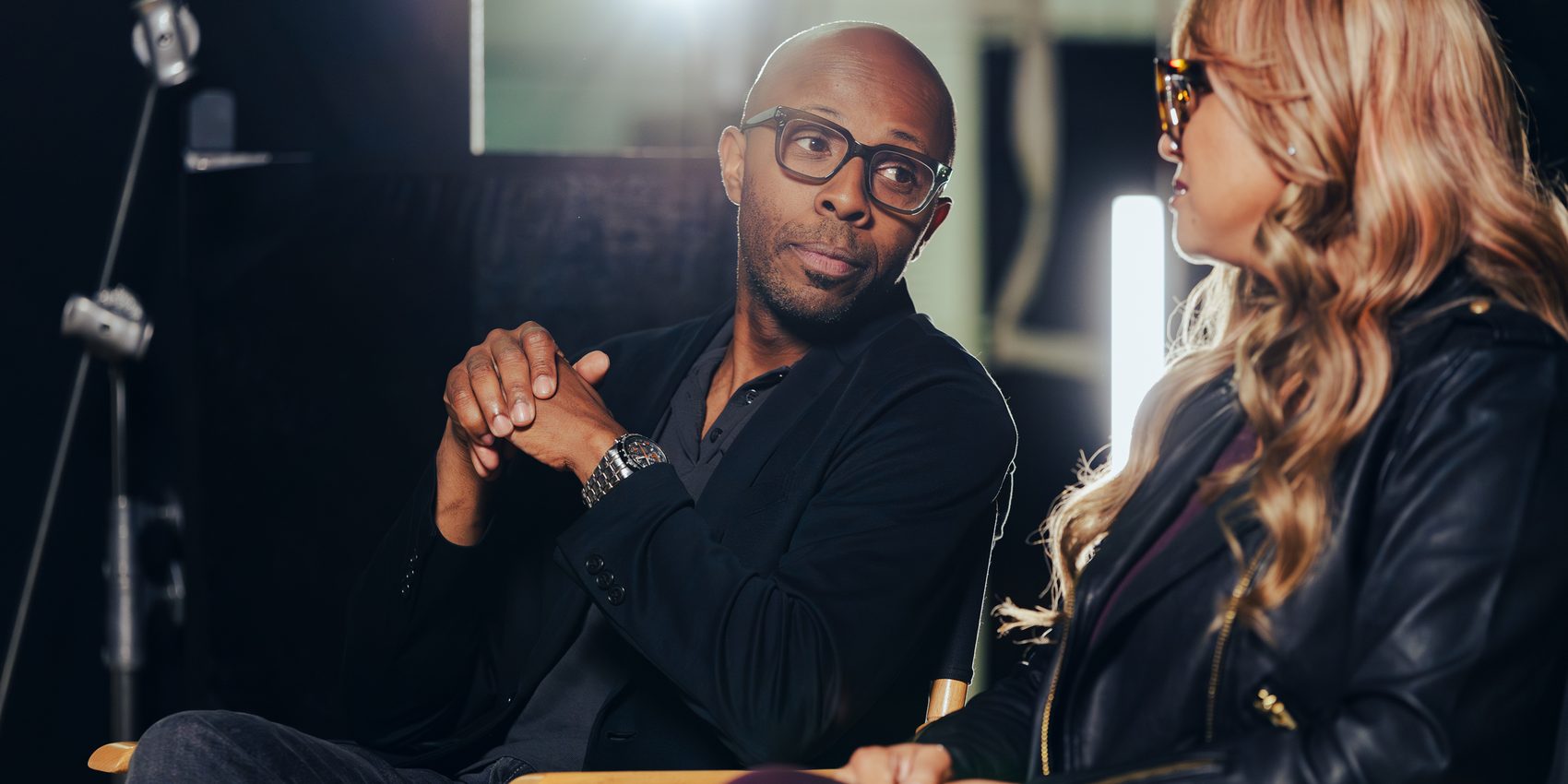
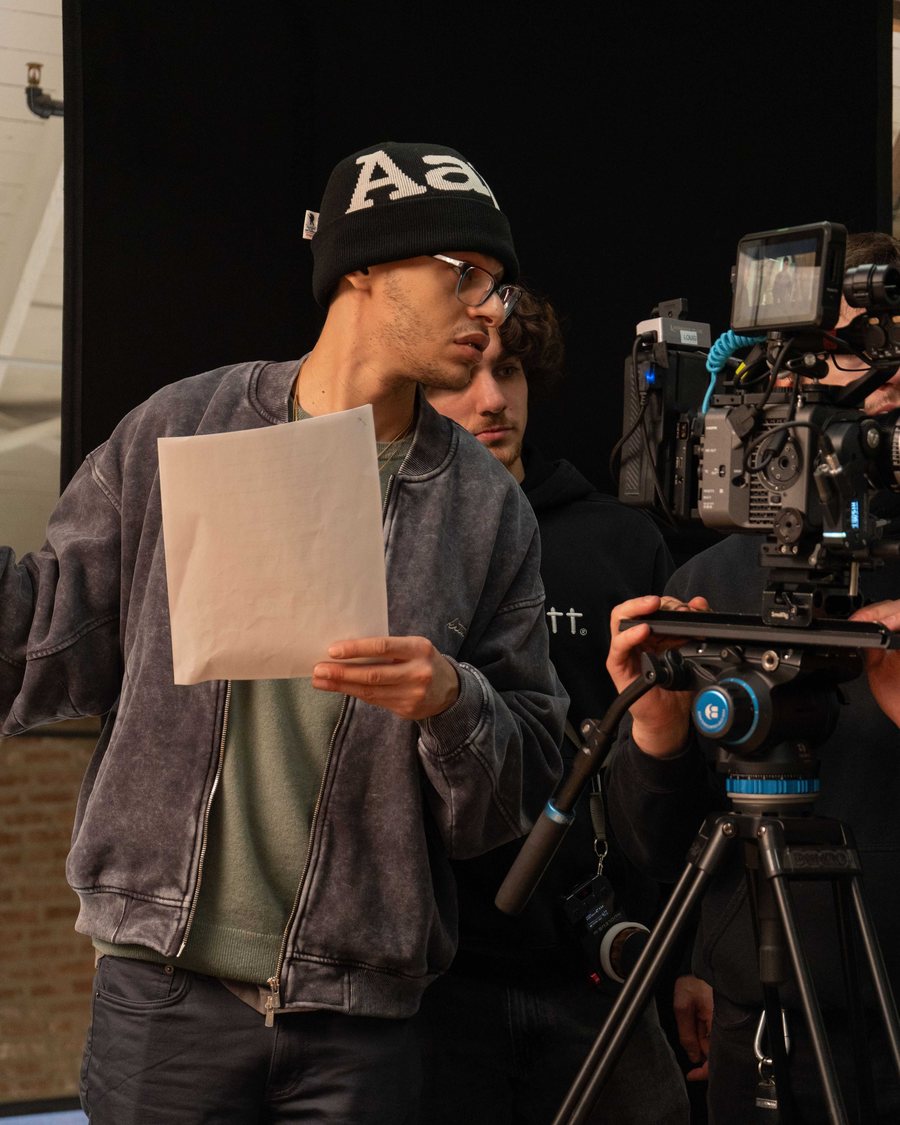
On set · Geff Zamor, Senior Managing PartnerCreative Direction · In the craft since 2001
The Senior Managing Partner
He came north for the great outdoors and the craft coffee. He stayed to pay the region back.
Los Angeles gave him a decade — a standard he could not unlearn and a fairly clear sense that he could keep doing that indefinitely. The Northwest offered mountains, better coffee, and considerably less certainty. He took it, and found a region full of stories and short on the people trained to tell them.
What happened next is the part worth understanding. He did not solve that alone, and he was never going to. He built the room instead — a Corps of creative and business professionals with twenty years apiece behind them, who came under one roof because they would rather build one serious thing together than six small ones separately.
That room is the institute. Every partner in it carries the client work and carries the next generation, because teaching here is a term of partnership rather than a favour. The young people they train become leaders in this community. That is what paying the region back looks like, and it was always going to take more than one person.
The Teaching Hospital
Every project trains the next generation.
THiNK•GMS runs like a teaching hospital: senior practitioners operate, fellows scrub in. Our junior fellows research, write, shoot, edit, and produce on real engagements with real stakes — supervised at every review gate, credited on every frame.
Fellows get the only education that has ever worked in this industry: reps, with someone watching. Every fellow we train is regional capacity that didn't exist before — which is why we lead with it.
That last line is the one we refuse to leave as a claim. We are researching the regional economic impact of this system in realtime — refining the instrument with every cohort and every engagement — because a house that argues the arts are an economic engine ought to be able to put a number on its own contribution to one. We would rather show you than tell you, so we are building the thing that lets us.
The production house grew a brain. The brain is the business.
01
Research First, Then Creative Solutions
Whoever you are, we study the problem before we touch it.
Nonprofit, government agency, or corporation — the method doesn't change. We research the problem, the audience, and the belief you're actually up against, then apply creative thinking to solve it. Perception studies, message testing, trust-signal research — findings that hold up because they were tested against real budgets and real deadlines. The strategy layer comes first; everything downstream gets sharper because of it.
02
Original IP — Theirs, Yours, and Ours
We'll develop yours. We develop our own.
Theirs, first: the junior and founding fellows who come through this house arrive carrying their own IP and their own passion projects, and we develop those with them — not as an exercise, and not on their own time. A fellow's project gets the same room, the same senior attention, and the same finishing standard as an account. That is the clearest statement we can make about what this place is for.
Yours: if you are sitting on a story that should be a format, we develop it with you and we finish it properly. The Untitled Soul Patrol Documentary. A mini-documentary on the Klamath water crisis. The Fab Lab, an original educational program built with OMSI — museum-exhibited and mastered for theatrical DCP. Post-production subtitle work on the Word Is Bond documentary, so it could travel past the room it premiered in. Different partners, different scales, same discipline.
Ours: there is also a shelf in this building that nobody outside it has seen — IP and a piece of technology we are developing for ourselves, because a research institute that only ever researches on commission is not really a research institute. You will hear about it when it is ready to be looked at properly. We are not going to describe it here.
03
Story & Production
Cinema-grade storytelling, without the bloat.
25 years of production discipline from the Senior Managing Partner, and over 120 years counting the full Corps — CNN-featured campaigns, IP consultation and execution, brand films for corporations, and helping people get their documentary projects off the ground — now run as a directed network: our creative direction, our standards, the right crew for the job.
✳︎ Top-rated video production, PDX metro — now with a research division ✳︎
Not a Credential
We made this one spot, and we run it every year.
A regional holiday spot we created for American Chimney & Masonry. It is warm, it is sentimental, and it goes back up every December because we like it and so do they. This is the schmaltzy side of the house and we are not going to pretend otherwise.
Client · American Chimney & MasonryFormat · Regional holiday spotStatus · Back up every December
Sentimental, unashamedly. A house that can only do rigorous is not actually very good at rigorous.
The Managing Partner Corps
Six industry veterans, and growing. One roof.
GZ
Geff Zamor
Creative Direction
25 Years
BE
Ben Edwards
Post-Production Editing
20+ Years
JM
Jeremy Marcott
Web Development
20+ Years
MP
Mark Pipes
Community Relationships
20+ Years
JS
Jake Standley
Illustration
20+ Years
JN
Joanna Munoz
Graphic Design & Art Direction
20+ Years
Working with THiNK•GMS means a back office of creative and business professionals with a twenty-year minimum apiece — over 120 years of practice under one roof — bringing that knowledge to bear on your projects — and every one of them is required to teach the young creatives and business professionals coming up behind them.
GMS feels like an extension of my organization's staff — they go the extra mile every time. The founder is not only a great business partner but a wonderful human, and he hires the best folks.
Statewide Nonprofit · Multi-year Client
✳︎ ✳︎ ✳︎
They translated and distilled our vision — multiple stakeholders, a short timeline, and they pulled it off. It was a big investment, and it was 100% worth it.
Founding Team · Product Launch
✳︎ ✳︎ ✳︎
It is such a relief to not have to worry about any aspect of the technical side — because I know they have it handled.
Development Group · Repeat Client
Before You Write To Us
We would rather be useful than be hired.
Every engagement starts with the same three questions. What do you actually need people to believe? Who has tried this before you, and what happened? And what would make you say this worked?
Sometimes those answers lead somewhere we are not the right room for. When that happens we say so.
If we are not the right room for the work, we will tell you who is.
THiNK•GMS · Saying 02
+++ Let's work together+++ Let's work together+++ Let's work together+++ Let's work together+++ Let's work together+++ Let's work together+++ Let's work together+++ Let's work together+++ Let's work together+++ Let's work together+++ Let's work together+++ Let's work together
Contact Us
Tell us what you're trying to build.
Research engagement, brand film, partnership inquiry, or a question no one else has been able to answer — the desk is open.
This page will not show you a wall of client logos.
You already know what those look like. Instead: the evidence, the long answer, and an honest accounting of what we are and are not.
Exhibit A
Fourteen years, compressed to about two minutes.
The old GMS Media & Advertising showreel. We are keeping it here, unedited, because an institute that hides its own receipts is not an institute. This is the decade the research is built on.
Archive · GMS Media & Advertising ShowreelStatus · Heritage. Still true. Still ours.Note · The cameras did not go anywhere
Yes, the reel is old. That is the point of a reel. If you want to see what we did last month, ask us — we will show you the thing itself instead of a montage of the good parts.
The Long Answer
People ask what we do at parties. Here is what we wish we'd said.
01
The Short Answer
"We're a creative research institute."
This is correct and it satisfies nobody. The follow-up question is always the same — what does that mean — and the honest reply is that we get hired when an organization has a problem that more advertising will not fix. Then we go find out what will.
Occasionally someone assumes we do market research surveys. We let it go. Life is long.
02
The Slightly Longer Answer
We study the problem, then we make the thing.
Most shops do one or the other. Strategists hand you a deck and disappear before anything gets built; production companies build beautifully and never ask whether it should exist. We do both, in that order, on purpose. The research is what makes the film worth shooting. The film is what makes the research worth reading.
This is the entire business explained in two sentences. We could stop here. We won't.
03
The Answer After the Second Drink
We think the arts are an economic engine and we intend to prove it.
Creative work generates jobs, gravity, and identity. Regions that understand this outrun the ones that don't. So we train fellows on live engagements, publish what we learn, and build original IP — because a production company makes deliverables, and the Northwest needs an engine. The client work funds the argument. The argument is the point.
At this stage of the party, people either lean in or find someone else to talk to. Both outcomes are useful.
Before We Say Yes
Six questions. They are not rhetorical.
i.
What do you actually need people to believe?
Not what you want to say. What has to change inside someone's head for your problem to go away.
ii.
Who has tried this before you, and what happened?
Almost always someone has. The failure is usually more instructive than the brief.
iii.
What would make you say this worked?
If the answer is "more views," we will gently keep asking until we find the real one.
iv.
Who inside your organization will hate this?
There is always one. We would rather meet them in week one than week nine.
v.
Is there a format here, or just a campaign?
Campaigns end. Formats compound. We can tell you which one you're holding.
vi.
Are we the right room for this?
Sometimes not. We will say so, and we will tell you who is. This has cost us money and gained us referrals.
A Partial Index
Things we have been called. Accuracy varies.
The video guys
Historically fair. Increasingly incomplete.
An agency
No. We have never once sold a media buy.
A production company
Yes, and still. See Exhibit A.
A vendor
Only by people we did not work with twice.
A think tank
Closer than you'd expect. With cameras.
Overqualified
Said as a warning. Received as a compliment.
An institute
The one we chose. It sets the standard we have to meet.
"Geff's guys"
Six Managing Partners strongly dispute this one.
We answer to about half of these. You are welcome to guess which half before you scroll.
Things we do not do. A shorter list than you'd think.
Logo walls
Every client on a grid, sized by ego. It tells you who paid us, not what we're capable of.
Case studies with fake numbers
"400% engagement lift." Against what baseline, measured how, by whom? We publish findings instead.
Pitching for free
Spec work devalues the craft and produces worse thinking. We'll have the conversation for free. Gladly.
The seniority bait-and-switch
The partner who scopes your work is the partner who does it. Fellows are additional, supervised, and credited.
Saying yes to everything
See question vi. The standing offer holds: if we're not the right room, we'll tell you who is.
Pretending the reel is new
It's fourteen years old. It's also very good. Both things are allowed to be true.
The Receipts
We said we would not show you a logo wall. We did not say we had nothing to show.
Drag · Hover · Click to open the project
Twenty-five years of it, in order, with the client and the problem attached to each one. Read any of them and you will know more about how we work than any capabilities deck could tell you.
The only education that has ever worked in this industry is reps, with someone watching. So we built the institute around that, and put the fellows on real work from the first week.
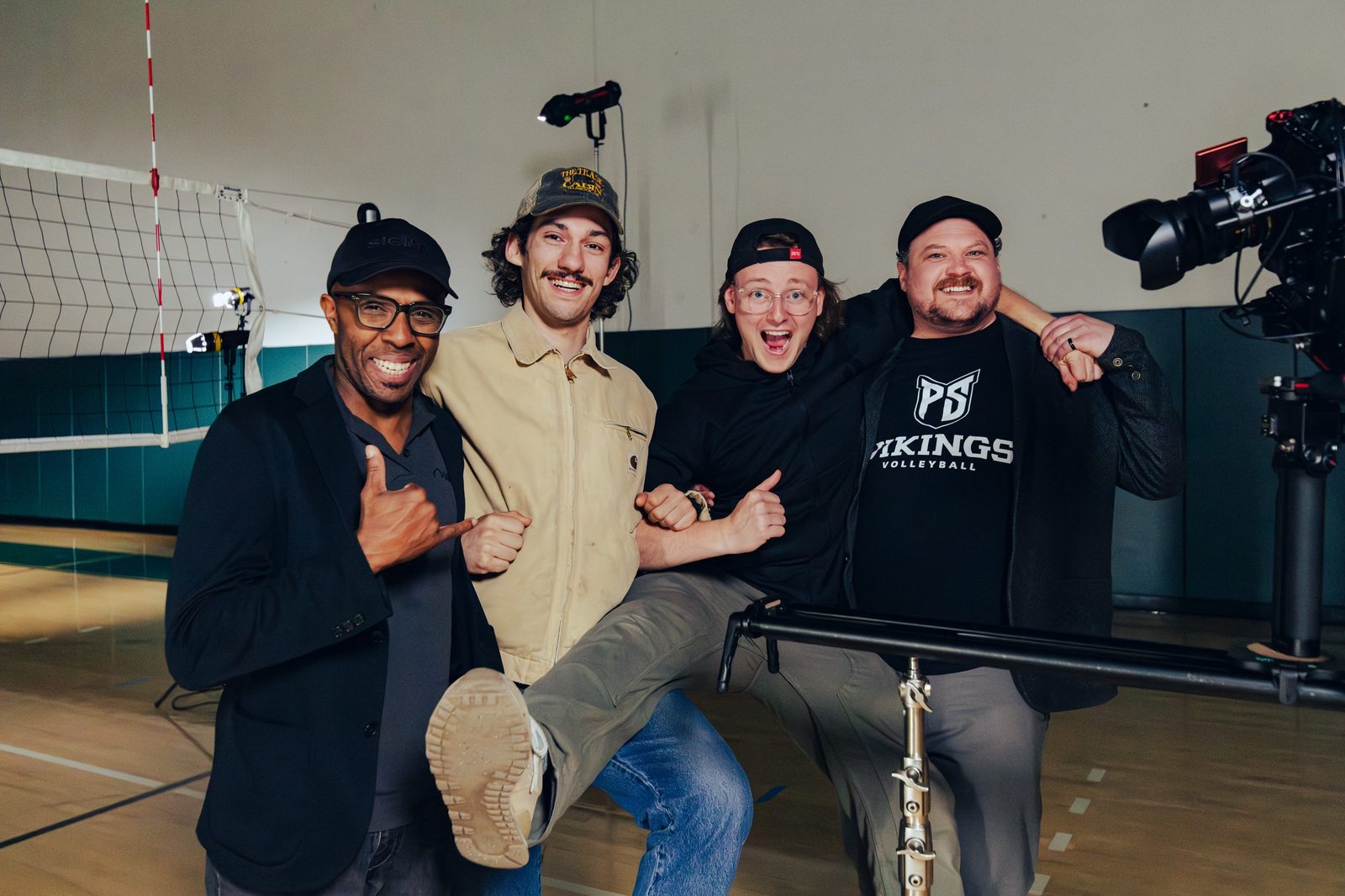
On location · Portland State University · 2025
Joseph Traver · Founding Fellow
Portland State University · Class of 2026
Fellow's Account · Joseph Traver · August 2026 FPO Draft
I graduated from PSU and started work on the brand itself.
The offer was not what I expected. I had assumed a first job in this industry meant a year of file naming and coffee runs before anyone let me near anything that mattered. Instead I was handed the identity of the institute I had just joined and told to help build it.
You do not learn this from a classroom. You learn it from being trusted with something real, early, while someone senior is still in the room.
What I have worked on since is the THiNK•GMS brand and the causes it serves across the Pacific Northwest — the nonprofits, the mission organizations, the rooms that do not usually get a film crew and a research team. That is the part I did not anticipate. The work is not abstract. Somebody is on the other end of it.
The supervision is the whole thing. Every review gate has a Managing Partner in it, and the notes are direct. I have had work sent back more than once. I have also had my name on the credits of things I am proud of, which is not something most people my age can say a year out of school.
If you are reading this deciding whether to apply: the standard here is high and nobody softens it for you. That is the offer. Take it seriously and it will be the fastest year of your life.
Joseph Traver · Founding Fellow, THiNK•GMS · Vancouver, WA
✳︎
Jeremy Husserl · Founding Fellow
Portland State University, BA · DePaul University, MFA
Fellow’s Account · Jeremy Husserl · August 2026 FPO Draft
I came here as a writer. I stayed to learn everything around the writing.
I am from Chicago. I studied English at Portland State, with minors in Writing, Black Studies, and Comic Book Studies — a combination that made perfect sense to me and required explaining to almost everyone else. Then I went back to Chicago for an MFA in Screenwriting at DePaul, and finished with high honors.
Ten years of odd jobs and freelance work will teach you how to write. They will not teach you what happens to the writing once other people get hold of it.
Before this I spent about a decade as an art curator and a freelance writer, which is a long way of saying I learned to work without anyone supervising me. That was useful. It was also incomplete. A script is a set of instructions for a room full of people, and until you have watched a room execute them, you are guessing at half of your own craft.
Right now I am writing a comic book mini-series called Airheads with artist Costis Chatzidakis, and shooting Draft Bust — an episodic thriller sports comedy short film series — with Undeveloped Films. And I am here, as a Founding Fellow, on institute work.
What I did not expect was how much of the education happens sideways. You come in for the writing and you end up in a room where somebody senior is explaining why the third act is a scheduling problem, not a story problem. Nobody sits you down for that. You just have to be there when it gets said.
Jeremy Husserl · Founding Fellow, THiNK•GMS · Chicago, IL
The Path
Three stages. You are useful in all of them.
i.
Intern
One term · Part-time · Supervised throughout
You are on live engagements from week one — logging, assisting, sitting in on research and review. You watch how partners make decisions, and you are asked what you think. Nobody fetches coffee here; there is too much actual work.
ii.
Junior Fellow
Ongoing · Paid · Credited on every frame
You own deliverables. You research, write, shoot, edit, and produce with a Managing Partner at each review gate — and the gate is real, which means work comes back. This is where the reps compound and the craft actually arrives.
iii.
Founding Fellow
By invitation · Institute-building work
You stop working only on client engagements and start working on the institute — the brand, the research, the original IP, the causes we take on because they need doing. Founding Fellows shape what THiNK•GMS becomes. There are not many. That is deliberate.
Fellows are additional to the partner on your engagement, never a substitute for one. That is the difference between a teaching hospital and a staffing shortcut.
Applications & Inquiries
The bench is small. The door is open.
Tell us what you want to learn and what you have already made. Portfolios help; curiosity helps more. We read every one.
You already have the young people. We have the bench that can train them.
If your organization exists to lift young people — a nonprofit, a university program, a community initiative — then you are already doing the hard part. You have their trust, and you know who is ready.
What is usually missing is the other half: practitioners with twenty years apiece who will put those young people on live, professional work and stand over their shoulder while they do it. That is the whole design of the Teaching Hospital, and we would like to open it to the people you serve.
Not a workshop. Not a career day. Real engagements, supervised at every gate, credited by name.
Nonprofits
Youth and mission organizations already doing the work
Universities
Film, journalism, advertising, and design programs
Community
Initiatives building regional capacity from the ground
One hundred and twenty years of practice. Every one of them teaches.
Six disciplines. Six practitioners with a twenty-year minimum apiece. Not a roster of availability — a standing faculty that takes the work and trains the next people to do it.
The Corps
Most firms rent this bench. We are the bench.
Agencies of our size solve seniority by subcontract. When the work gets hard, they find someone. We built the opposite: six Managing Partners, each with a minimum of twenty years inside their own discipline, sitting under one roof and sharing in what the institute builds.
That produces two things a client can actually feel. First, the person who scopes your work is the person who does it — no seniority bait-and-switch between the pitch and the delivery. Second, and this is the part almost nobody replicates: every partner teaches. Interns, junior fellows, and founding fellows all learn from partner-level practitioners on live engagements, not from a curriculum written by someone who left the craft a decade ago.
It is the reason the research holds up. A think tank staffed by researchers who have never shipped anything produces papers. A Corps of working practitioners who have shipped for twenty-five years produces findings you can build on — tested against real clients, real budgets, and real deadlines, then handed down to the people coming up behind us.
20+
Years Minimum, Each
Not an average across the team — a floor under every single partner.
06
Disciplines, One Roof
Creative direction, post, web, community, illustration, design — held in-house.
100%
Of Partners Teach
Every partner carries fellows on live work. Teaching is a term of partnership.
Thought leadership isn't a content calendar. It's a hundred and twenty years of practice, in a room, willing to be questioned.
The Practitioners
Six people. Six practices. One standard.
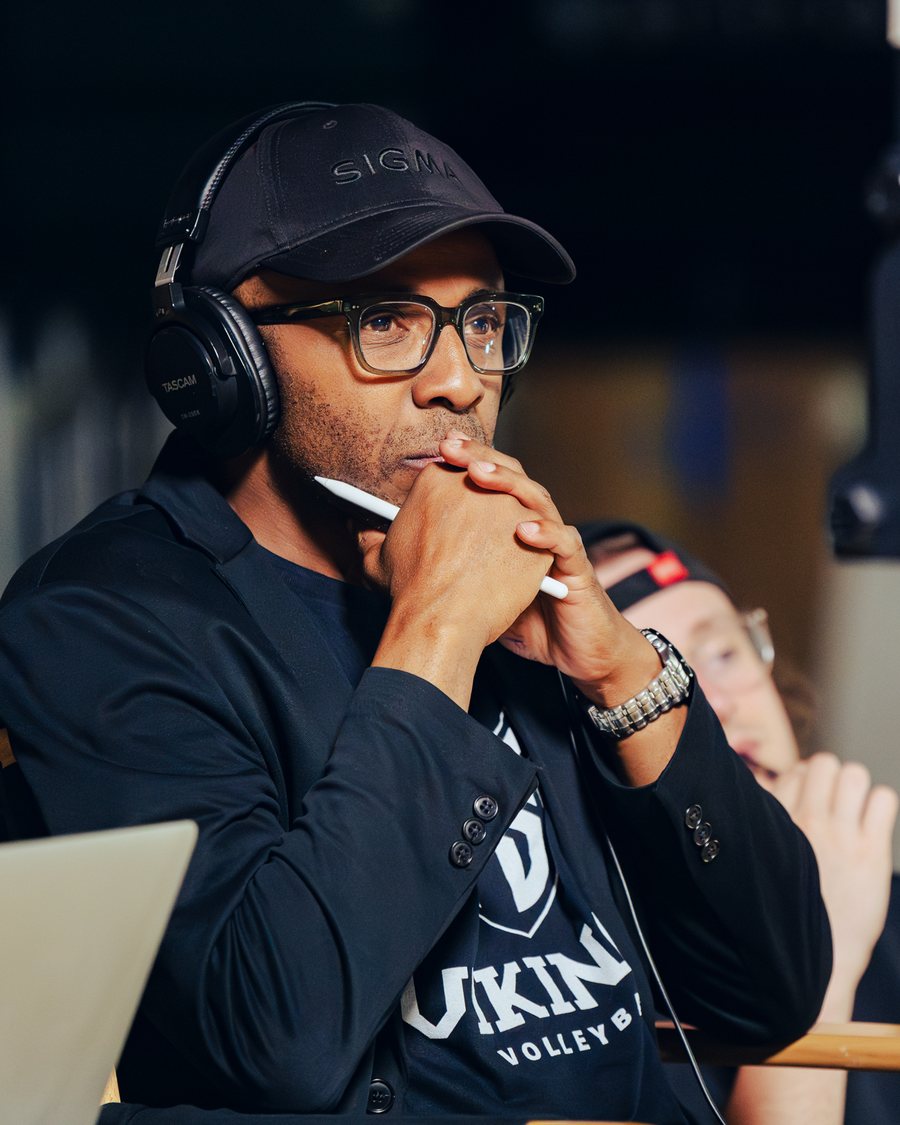
On the monitor · Vancouver, WA
Partner 01 · Since 2001
Geff Zamor FPO Bio
Creative Direction · Senior Managing Partner
Twenty-five years in media, advertising, and entertainment — Los Angeles first, the Pacific Northwest since December 01, 2010. Sets the creative standard for every engagement that leaves the building and decides what the institute researches next.
Representative Work
Statewide public-health campaign featured on CNN; The Fab Lab with OMSI; the Untitled Soul Patrol Documentary; brand film suites for AmLaw-scale firms.
What He Teaches
Creative direction, client discovery, and the discipline of researching before you shoot.
Post · Where the story is decided
Partner 02 · 20+ Years
Ben Edwards FPO Bio
Post-Production Editing
Two decades in the edit bay, where the story is actually decided. Owns the finish on every frame the institute delivers — assembly through color, sound, and master — and holds the line on the standard when the schedule argues otherwise.
Representative Work
Theater-mastered documentary finishing; long-form campaign edits under compressed delivery windows; DCP and broadcast masters.
What He Teaches
Edit theory, pacing, and how a fellow learns to kill their favorite shot.
Web · Vancouver, WA
Partner 03 · 20+ Years
Jeremy Marcott FPO Bio
Web Development
Twenty years building the places where brand narrative actually gets tested — sites, platforms, and the measurement underneath them. Turns the institute's research into instruments: the pages, funnels, and trust signals an organization's audience meets first.
Representative Work
Platform builds for reputation-driven firms; campaign microsites with instrumented message testing; accessibility and performance remediation.
What He Teaches
Front-end craft, technical standards, and reading what the data is really saying.
Community · And a standing gig
Partner 04 · 20+ Years
Mark Pipes FPO Bio
Community Relationships
Two decades of relationship building across the region — the discipline the institute treats as its primary service. Maps the networks, opens the rooms, and makes sure the work serves the community it was made in, not just the client who paid for it.
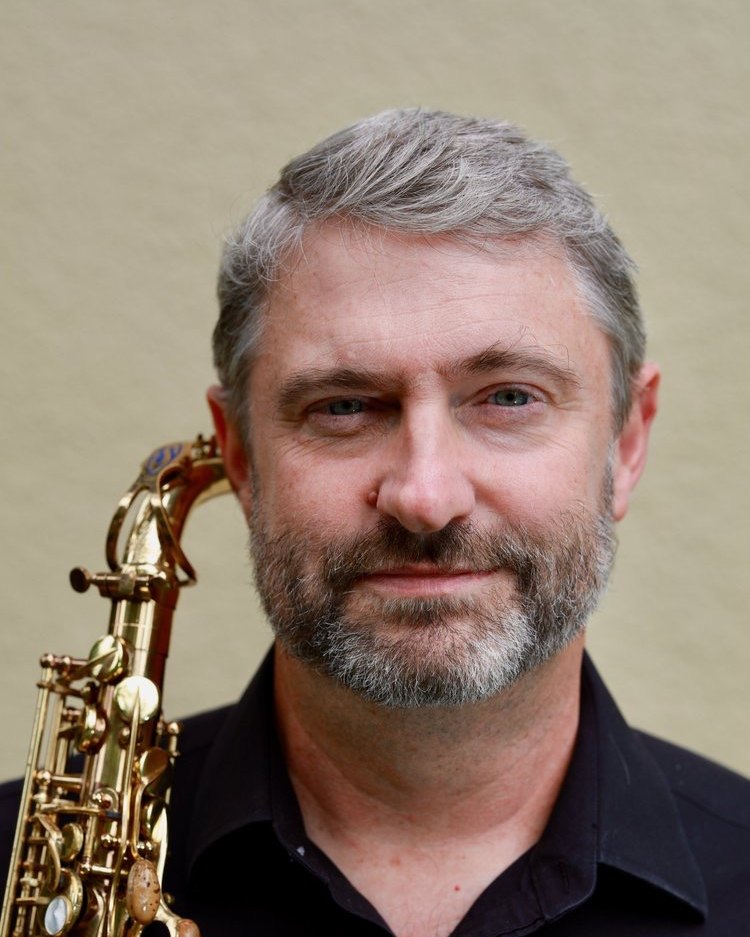
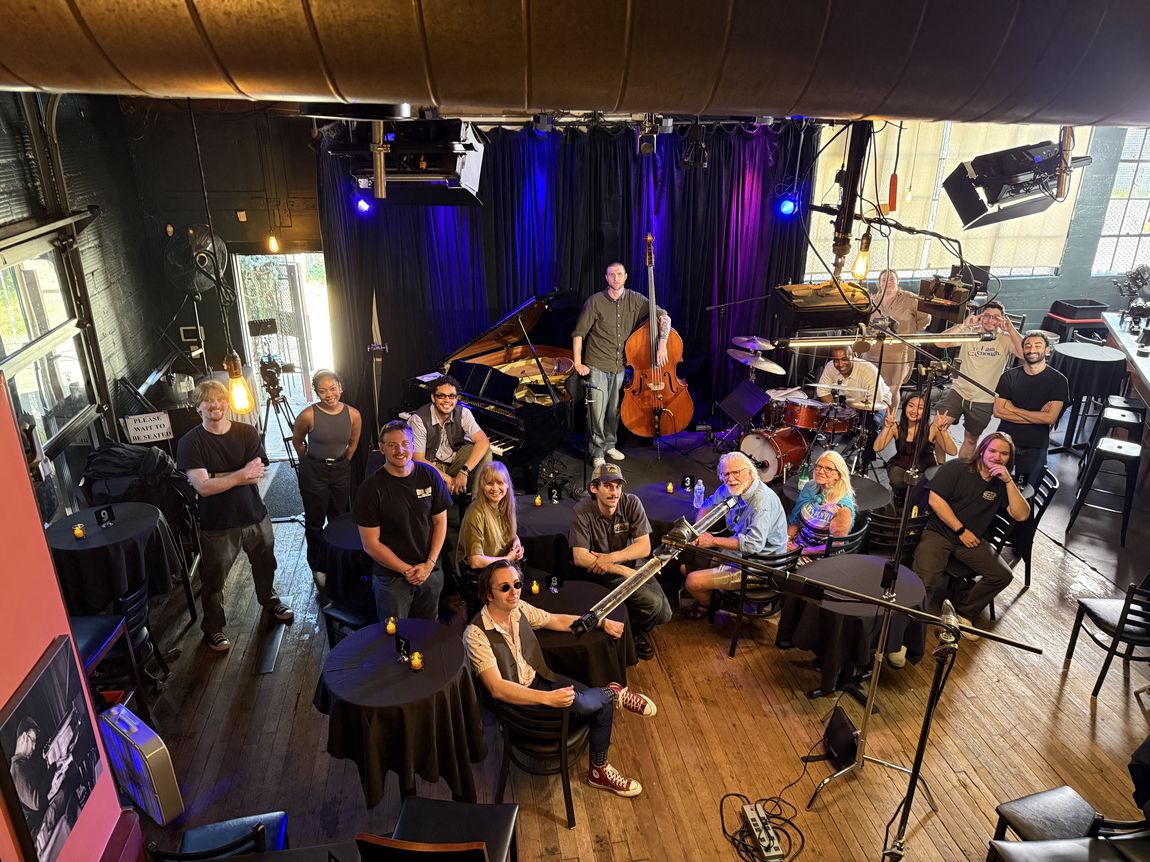
He is also a working musician who teaches music, which is not a footnote. The institute's belief that every practitioner should be training the next one is something Mark was already doing before there was a policy for it — and it is why the jazz work on our slate has never been a stylistic preference. It is a room he actually plays in.
Representative Work
Multi-year nonprofit partnerships including Word Is Bond; regional coalition storytelling; live jazz films; mission campaigns for organizations the system overlooks.
What He Teaches
Relationship method — mapped networks, earned trust, long cycles. And music, on his own time.
In front of the work
Partner 05 · 20+ Years
Jake Standley FPO Bio
Illustration
Twenty years of drawing what a camera can't get to. Handles the institute's original IP development, character and world design, and the visual thinking that happens on paper long before anything is scheduled to shoot.
Representative Work
Character and world design for The Fab Lab, our educational program with OMSI; campaign illustration systems; storyboards for narrative and documentary.
What He Teaches
Drawing as thinking — boards, visual development, and finding the idea before the budget.
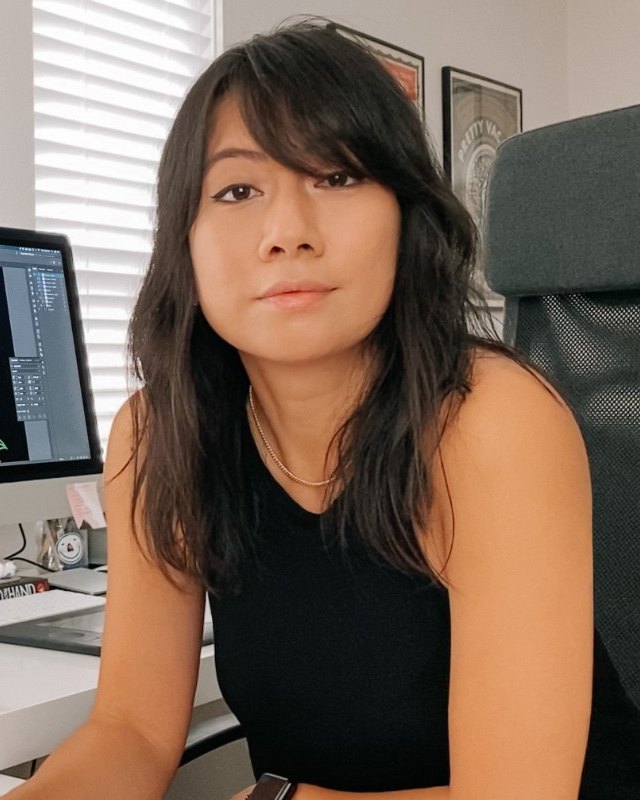
At the desk · Lettering in progress
Partner 06 · 20+ Years
Joanna Munoz FPO Bio
Graphic Design & Art Direction
Two decades of design systems and art direction — the layer that makes a brand legible before a word is read. Sets the visual grammar every engagement inherits and art-directs the shoots that have to live inside it.
Representative Work
Identity and design systems for high-touch firms; lettering and illustration systems; exhibit and retail environments; art direction for brand film and stills.
What She Teaches
Typography, systems thinking, and why the small decisions are the whole argument.
Twenty-five years in the craft. One conviction about why it matters.
01
The Road North
Los Angeles taught us the craft. The Northwest gave it a purpose.
Our Senior Managing Partner has worked in media, advertising, and entertainment since 2001 — Los Angeles years, studio-grade standards, the school of doing it right because everyone around you does it right.
On December 01, 2010, GMS emigrated north to the Pacific Northwest — and found a region rich in stories and talent, and underserved in the infrastructure to develop either. For over a decade, GMS Media & Advertising built that infrastructure the honest way: client by client, frame by frame.
On location · Pacific Northwest
2001
The craft begins — media, advertising & entertainment, Los Angeles
2010
December 01 — GMS plants its flag in the Pacific Northwest
2024
The production decade peaks — and the bigger question takes over
2026
THiNK•GMS — the institute era begins
The Class of 2025
They worked hard. They also had a very good summer.
On Set · 2025
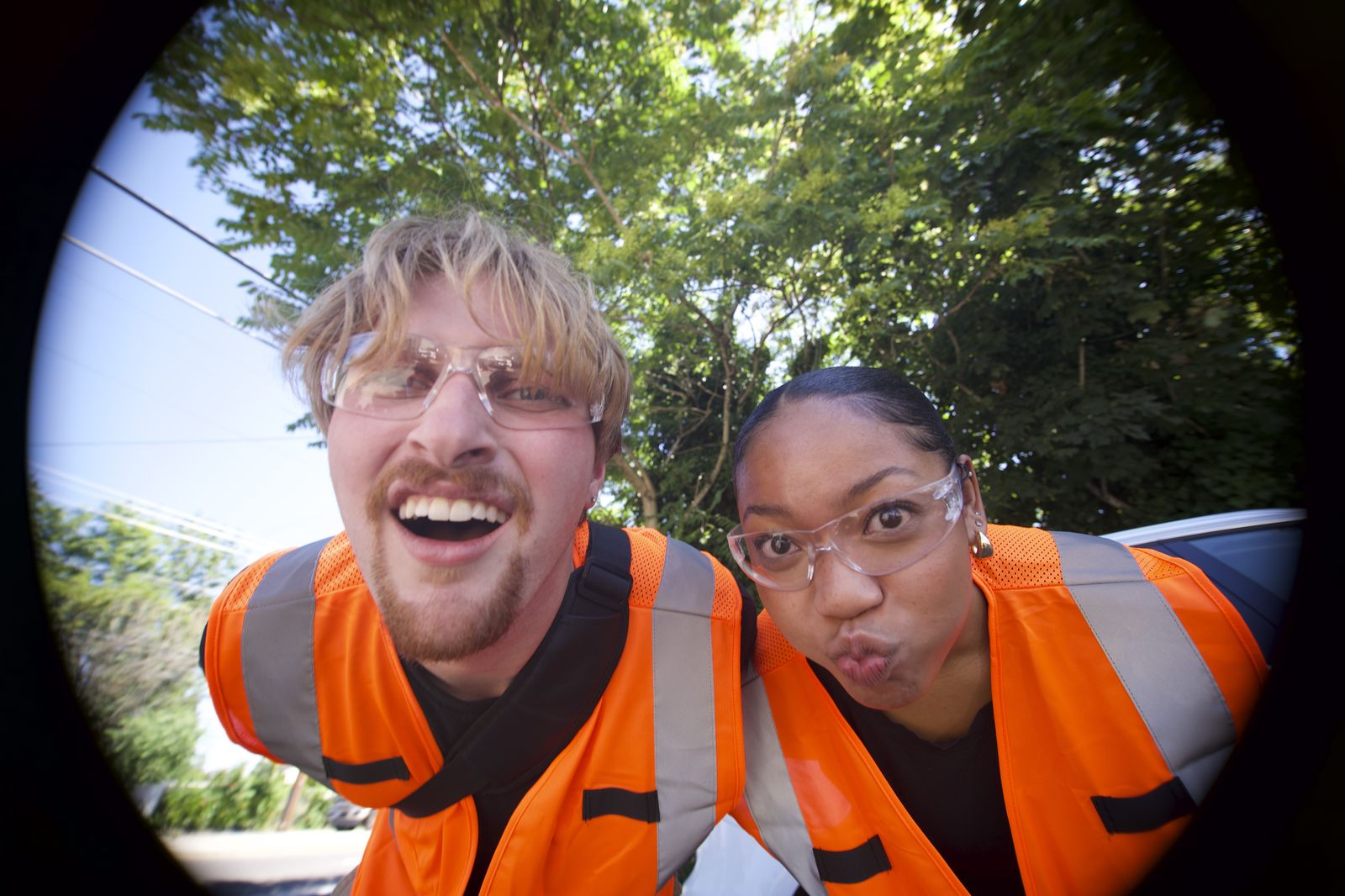
Two University of Oregon interns, somewhere in the twelfth hour.
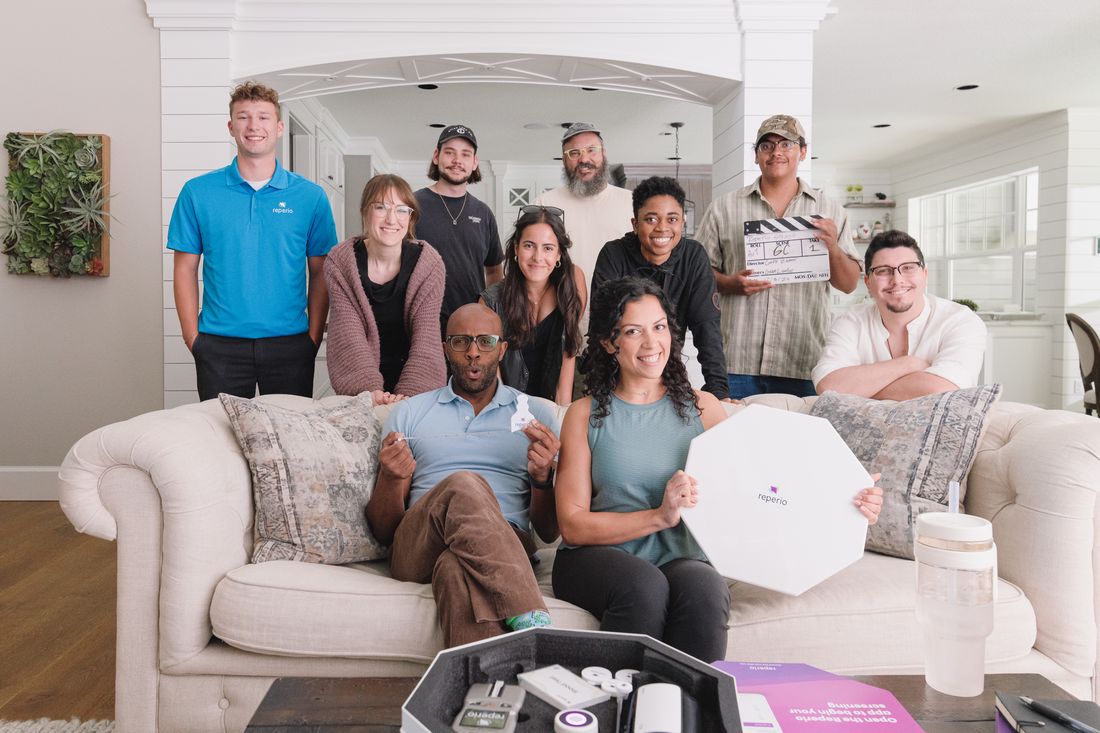
Our 2025 interns spent the summer on live engagements — call sheets, safety vests, long days in the sun, and review gates that sent work back more than once. They earned their credits the only way anybody does. They worked hard.
They also did this, roughly forty times, usually when somebody was trying to get a clean take. A set that nobody enjoys produces work that nobody enjoys, and the institute has never once confused seriousness with solemnity. They played hard too — and both halves of that are why they got asked back.
02
The Earliest Frame
Year two in the business. Same face. Same set.
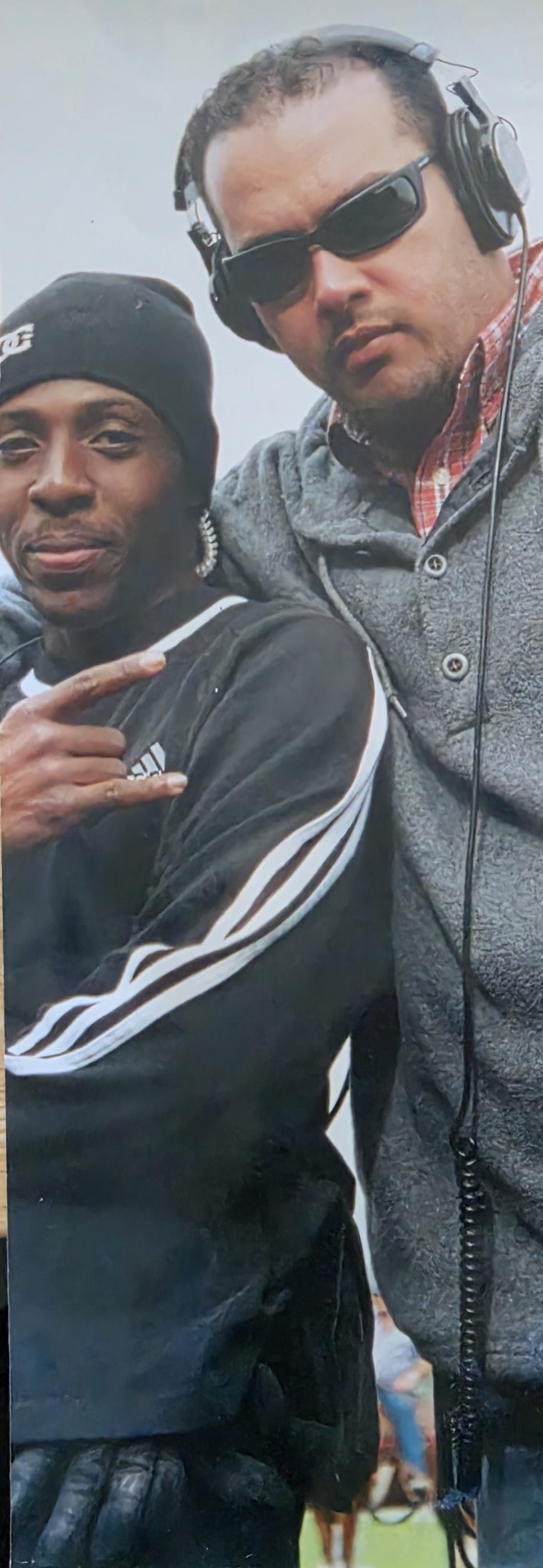
This is the oldest photograph we have of Geff Zamor working — headphones around a crew neck, somebody's arm over his shoulder, both of them plainly having a good time on a very long day.
It was taken on the set of Seabiscuit in 2002, one year into a career that started in 2001. Twenty-four years later he is still on set, still with his arm around someone younger than him, and the argument this institute makes about training people is really just this photograph, repeated on purpose.
Seabiscuit · 2002 · Twenty-four years ago
03
The Conviction
We believe the arts are an economic engine.
Not decoration. Not a nice-to-have when the budget allows. A true economic driver — the thing that makes a region worth moving to, worth staying in, worth building in. Creative work generates jobs, gravity, and identity, and the regions that understand this outrun the ones that don't.
That conviction has consequences. It means educating young professionals is economic policy — every fellow we train on real work is regional capacity that didn't exist before. And it means creative thinking belongs on hard problems — trust in the AI era, workforce pipelines, community storytelling — not just on campaigns.
An institute, because a production company makes deliverables — and the Northwest needs an engine.
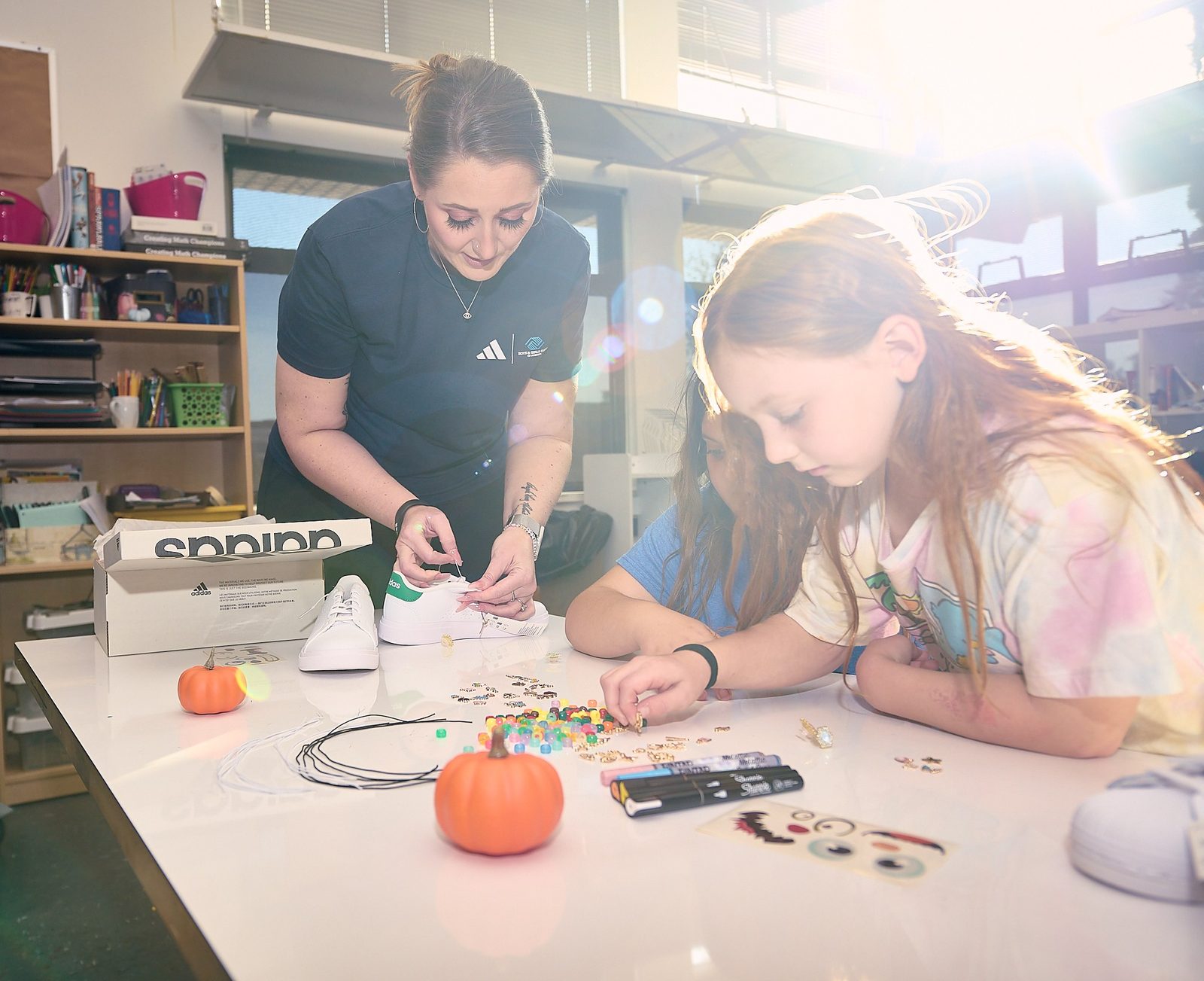
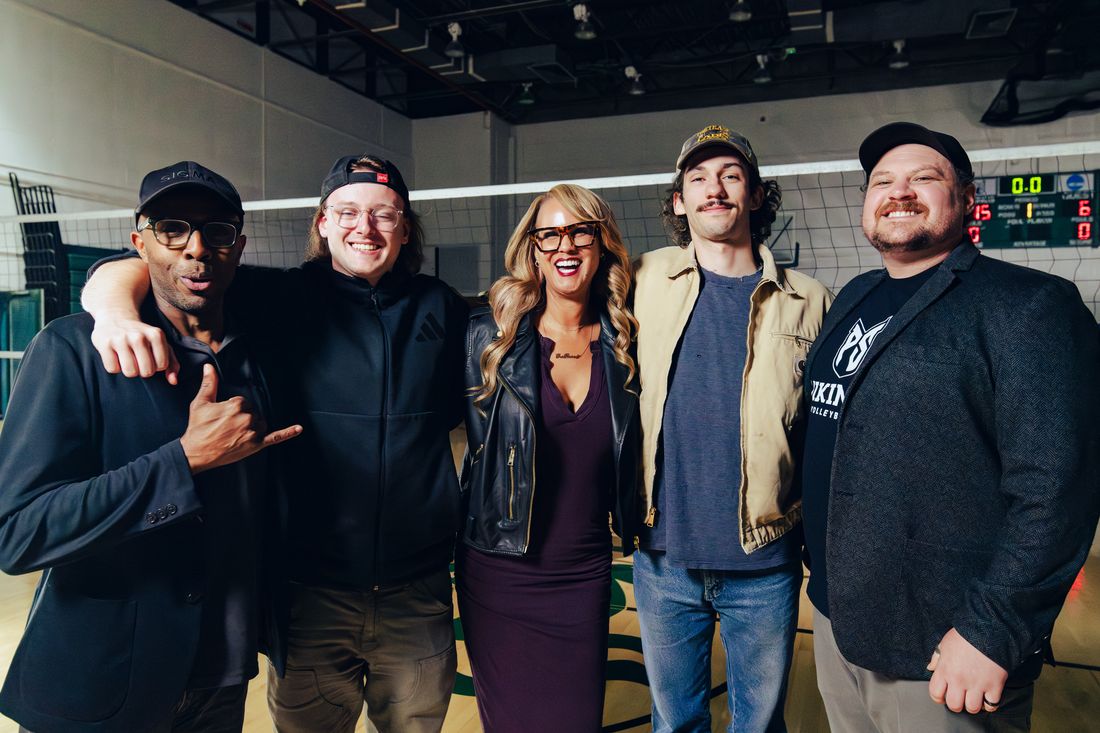
Boys & Girls Club · with Adidas · as pictured
04
The Model
Research. Teach. Build. Repeat.
Research — we study organizations, markets, and communication the way a lab studies anything: with method, curiosity, and published points of view. Teach — the Teaching Hospital puts fellows on real engagements under senior supervision, turning every project into a classroom that pays for itself. Build — client work funds the institute; original IP makes it matter beyond any single client.
Around it all stands the Managing Partner Corps — six industry veterans across creative direction, post-production, web development, community relationships, illustration, and design.
Creative thinking can solve a lot of problems. We intend to prove it.
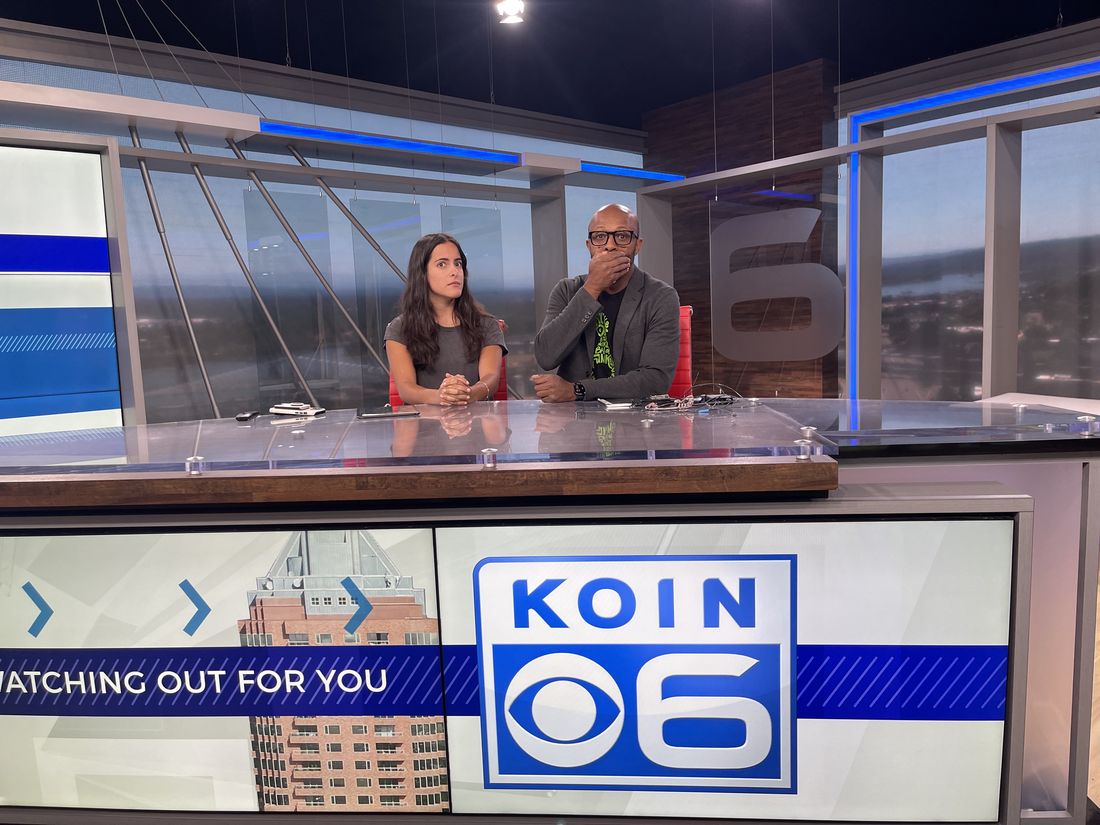
KOIN 6 · Behind the scenes · Portland, OR
The Yearbook
The people who built this, and where they went next.
Not a staff list. A record of the people who came through GMS — some still here, some running their own shops now. An institute that trains people properly should expect to lose a few of them to their own ambitions. We count that as the point.
Click a photo to read the story · Drag to rearrange the wall
More names are being added as we track people down and get their permission. If you came through here and we have not asked you yet, we will.
The Record
Twenty-five years of work, client by client.
Every engagement in order, with the problem and the people attached to each one.
Every era of the practice, in order — Los Angeles through the production decade to the institute. Drag the rail; open any project.
Drag · Hover · Click to open the project
Entries are FPO placeholders staged to prove the format. Each one opens a full project record — the same template the production build will populate.
By the Decade
Three chapters, one throughline: research first.
2001—2010
The Los Angeles Years
Studio-grade standards learned the only way they can be — surrounded by people who refuse to do it any other way. Broadcast, agency, and entertainment work that set the floor for everything after.
2010—2024
The Production Decade
December 01, 2010 — north to the Pacific Northwest. Fourteen years of building regional infrastructure client by client: campaigns, documentaries, exhibited television, and films for the region's most particular organizations.
2024—2026
The Institute Era
The bigger question takes over. Research, the Teaching Hospital, original IP, and a Managing Partner Corps — the production house with a brain, and the brain as the business.
Every engagement starts the same way — a conversation, before a proposal. Tell us the problem in your own words; we'll tell you honestly whether we're the right room for it.
Behind the scenes · 2025 Montavilla Jazz Festival
The Inquiry
Start the conversation.
Online form submissions are not available yet. The fields below show what to include when you email hello@thinkgms.com; entering them here will not send anything.
hello@thinkgms.com Vancouver, WA & Portland, OR The Pacific Northwest, since December 01, 2010
What Happens Next
i.
We read it ourselves. Every inquiry lands with a Managing Partner, not a queue.
ii.
A reply within two business days — including an honest no, if that's the right answer.
iii.
A thirty-minute conversation. No deck, no pitch. We ask questions and listen.
iv.
If there's a fit, a scoped proposal with the research layer built in from the start.
Who We Work With
Corporations, government agencies, and nonprofits facing problems that more advertising will not fix — alongside founders and mission organizations building something that deserves to be understood.
The Standing Offer
If we're not the right room for the work, we will tell you who is.
Base of Operations
Vancouver, WA — and across the river.
We work both banks of the Columbia. Vancouver is home; Portland is the other half of the market, ten minutes and one bridge away. The whole Pacific Northwest is the territory.
✳︎
Vancouver, WA · Portland, OR
Home · Vancouver, WAAcross the River · Portland, ORTerritory · The Pacific Northwest, since December 01, 2010
By appointment. We come to you, or you come to us — either way, the conversation happens before the proposal does.
✳︎ Research first. Then the work that changes what people believe. ✳︎
The Corps is growing deliberately. Tell us which door you're knocking on — and we'll tell you honestly whether it's the right one.
The Inquiry
Which are you asking about?
Online form submissions are not available yet. Pick a track to see what to include when you email partners@thinkgms.com; entering details here will not send anything.
i.
Managing Partner
You own a discipline outright, with twenty years or more inside it. You'd bring that craft under one roof, teach fellows as a term of partnership, and share in what the institute builds. Inside the house.
Select this track
ii.
Principal
A certified vendor working inside our structure — pre-vetted, trusted, called on by name. Not equity and not faculty: a standard met and a relationship earned, engagement by engagement.
partners@thinkgms.com Vancouver, WA & Portland, OR The Pacific Northwest, since December 01, 2010
What Happens Next
i.
A Managing Partner reads it. Not a queue, and not a form letter back.
ii.
A reply within two business days — including an honest no, which is the most common answer.
iii.
A conversation about the work itself. We'd rather see one thing you're proud of than a full reel.
iv.
Principals are certified against a standard. Managing Partners are invited by the existing Corps, unanimously.
The Difference
Managing Partner — owns a discipline, teaches fellows, shares in what the institute builds.
Principal — certified and pre-vetted, works inside our structure, called on by name.
Why We Say It Plainly
Most firms blur the line between partner and contractor. It lets them oversell the bench. We'd rather tell you which one you're being offered.
Where You'd Be Building
Vancouver, WA — and across the river.
The Corps works both banks of the Columbia. This is a bet on a region as much as a practice: rich in stories and talent, and still short on the infrastructure to develop either. That gap is the opportunity, and it is the reason to build here rather than somewhere easier.
✳︎
Vancouver, WA · Portland, OR
Home · Vancouver, WAAcross the River · Portland, ORRemote · Considered, for the right practice
You do not have to live here to work with us. You do have to care whether this region has a creative economy in ten years.
Tell us what you are actually facing and we will tell you whether we are the right room for it. Clients of the institute can go deeper — the research in this sector, run against their own organization.
We have spent an entire page explaining why we do not want to be a list of services. We have then been asked, by nearly everyone, for a list of services. This is that list. It is accurate, it is short on purpose, and we are only a little bit sorry about it.
A Concession
Eight things people keep asking whether we do.
The honest answer is that we do all of them, we have done all of them for years, and none of them is the reason to hire us. They are the reason the research ends up as something you can hold. The first one is where most engagements actually begin.
01
Consultant Services — New Businesses & Brands
Positioning for organizations about to launch, and organizations about to grow.
The most expensive decisions an organization makes are made before it has any revenue to justify them. Who this is for. What it is worth. What it is called. Which market it enters first, and which three it deliberately does not. Those decisions get made once, usually quickly, and every subsequent year is spent either compounding them or paying to undo them.
We are engaged at that moment. Market definition, competitive positioning, value proposition, naming and identity architecture, pricing posture, go-to-market sequencing, and the readiness work that has to happen before a launch is announced rather than after. The output is a position an organization can defend, hold, and build on — not a deck.
We have done this for organizations at both ends of the scale: companies with a board, a category, and a great deal to lose, and founders with a conviction and eighteen months of runway. The method does not change. The stakes and the sequencing do.
And because positioning is only as good as its execution, we bring the contacts and competencies to carry it through — research, brand, production, and the operators in this region who can actually deliver. The strategy and the people who execute it sit under the same roof.
Most organizations do not have a positioning problem. They have a position nobody ever wrote down, which everyone in the building interprets slightly differently, and which the market interprets differently again.
Somebody has to read it properly before ten thousand people do.
Line editing, structural editing, proofing, and the more useful thing underneath all three: deciding whether the sentence is doing the job it was written to do. Grammar is the easy part and it is not the part that costs organizations money.
Most of what we fix is not error. It is a paragraph that says four things when it needed to say one, a headline that is clever instead of clear, or a claim that is technically true and will be read as something else entirely. We would rather have the argument with you than let your audience have it without you.
The headline in the exhibit above was not the first one written. It was the fourth, and the three before it were all about chimneys rather than about the fire you are about to light in front of your family.
03
Still Photography
On location, in studio, and considerably more of it than you want to look at.
Product, portrait, environmental, event, editorial, architectural, and the unglamorous documentation nobody thinks about until they need it. On your site, in your building, or on our stage.
We mention volume not to boast but as a warning. The archive is now large enough that reviewing every frame we have taken would occupy a client for roughly three months of continuous watching, without sleeping, and we would not recommend it. What matters is not that there are a great many pictures. It is that somebody decided what each one was for before it was taken.
~3 mo.
Continuous viewing time to get through the full still archive. We have done the arithmetic. We wish we had not.
01
Number of frames that actually run in a campaign. Selection is the service; the archive is the evidence.
∞
Number of times a client has said “just grab a few shots while you are there.”
Exhibit · American Chimney & Masonry · Still photography, copy, and print layout · One artifact, all three services below
That is the Americana moment at the fire, and it did not happen by accident. Somebody chose the hour, the wool, the child, and the fact that the family has their backs to us — because a face would have made it about them, and it needed to be about the room.
04
Email Marketing
“Email marketing” is too broad a term to mean anything.
It is not the sending. Anybody can send. It is the list, the database, the target, and the small details underneath all three — who is actually on there, how they arrived, what they thought they were signing up for, and which of them should be hearing from you at all this month.
This is not spray and pray. It is segmentation, testing one variable at a time, feeding what the test tells you back into the database, and then doing it again. Slower than the alternative and the only version that compounds.
Short story: we can handle all of it for you. The audit, the cleanup, the segments, the writing, the sending, and the honest reading of what came back — including the numbers nobody enjoys.
We watch unsubscribes more closely than opens. It is the most honest number in the system, and it is the one that tells you whether the last send was worth somebody’s time.
The unglamorous half of governance, which nobody volunteers for.
Every board has a list of things that need doing and no obvious person to do them. A seat has opened and the shortlist is three names long, all of them from the same three rooms. The technology decision needs somebody who actually understands it. The annual report has been due for a month. Somebody has to write the thing before the retreat.
If your board needs a new member, we can help you find one. If your board needs technical help, we can find that too. Governance documents, recruitment, onboarding materials, the presentation that has to land with a funder, the awkward conversation that needs framing before it happens — whatever your board of directors needs, we can help with it.
We are not consultants arriving with a model. We serve at the board’s request, which means the board decides what the work is and we do it properly.
Nonprofit boards in this region are staffed by generous people with day jobs. Most of what stalls a board is not disagreement. It is that the work fell to whoever had the least to do that month.
More high-end nature footage of the Pacific Northwest than an eagle.
Licensed, insured, and flown by people who understand that the shot is a directing decision rather than an altitude. Coastline, forest, river, ridge, farmland, and the built environment — plus the practical work that pays for the pretty work: site surveys, progress documentation, roof and structure inspection, and the establishing shot that saves a location scout.
The claim in the headline is doing a lot of work, so here is the honest version. An eagle has better access and considerably more flight time. What it does not have is a shot list, a colourist, and somebody on the ground who knows why the light at that hour is the entire reason you are up there.
Anybody can put a camera in the air. The region is now full of aerial footage of things nobody needed to see from above. The question we ask first is whether the story is actually happening up there.
07
Social Media Marketing & Video Production
We are not going to show you any examples.
We have been doing social media marketing since before the internet was wearing short pants, and video production for considerably longer than that. Strategy, calendar, capture, edit, cutdowns, verticals, captions, and the parts nobody enjoys — the posting, the answering, and the reading of what actually happened afterward.
You are just going to have to trust us on this one. Or you can contact us, at which point we will send you an entirely unreasonable deluge of it and you will wish you had taken our word for it.
There is a version of this page with forty embedded videos on it. We have seen that page on other people’s websites. Nobody has ever watched the fortieth one.
The channel everyone declared dead, which keeps outperforming its obituary.
Layout, production, and placement — the printed piece and the decision about where it should appear. Regional publications, direct mail, programmes, trade press, signage, and the venues where your audience is already standing still.
We are not sentimental about paper. We are sentimental about attention, and print still buys a kind of it that a feed cannot: a thing in a hand, in a house, with nothing next to it competing. The research tells us which rooms your audience is actually in. Print is frequently the answer, and when it is not, we will say so.
Right channel, right venue, right moment. A beautiful piece in the wrong publication is an expensive way to be ignored.
And Now, Having Listed Them
Please do not hire us for a list.
Every one of these is real and we are good at all of them. But a service ordered off a page is a service delivered without a question behind it, and that is how organizations end up with a beautiful piece that changed nothing.
Tell us the problem. We will tell you which of these it needs — and whether it needs any of them at all.
Send us your young people. We will train them like professionals.
A partnership program for nonprofits, universities, and community initiatives already doing the work of lifting young people — and looking for somewhere serious to send them next.
On location · Portland State University · 2025
The Pacific Northwest does not have a talent problem. It has a training problem.
There is no shortage of young people here who want to make things. What there is a shortage of is the middle step — the years between wanting to do the work and being trusted with it. That step used to happen inside institutions that no longer hire the way they did, and the young people who cannot find it leave. Most of them do not come back.
We built the Teaching Hospital to hold that step open. Senior practitioners operate; fellows scrub in. Six Managing Partners with a twenty-year minimum apiece, all of whom teach — not as outreach, but as a term of partnership. Every fellow works on live engagements with real stakes, supervised at every review gate and credited on every frame.
It works. We would now like to open it to the organizations who already have the relationships we do not — who know these young people, have earned their trust, and can tell us who is ready.
If that is your organization, this page is the offer.
The Philosophy
Four convictions. Everything else is logistics.
i.
Reps, with someone watching
It is the only method that has ever produced a working professional in this industry, and it is how surgeons, pilots, and tradespeople have always been made. Classroom instruction can teach principles. It cannot teach judgment, because judgment is what you develop by making a decision, being wrong, and having someone senior explain why on the same afternoon.
ii.
Real work or nothing
Simulated projects teach simulated skills. A young person who has only ever made things nobody was waiting for has not yet learned the part that matters — what happens when a client disagrees, a schedule collapses, or the good idea turns out to be unaffordable. We put fellows on paying engagements. The stakes are what does the teaching.
iii.
Credit by name
A fellow’s name goes on the work they touched. Not as generosity — as evidence. The single hardest thing for a young creative to obtain is a credible claim about what they have actually done, and an organization that withholds that is extracting labour and calling it experience.
iv.
Training is economic policy
Every young person trained here on real work is regional capacity that did not exist before. They stay, they get hired, and eventually they train somebody else. A region that builds this compounds; a region that exports its ambitious twenty-two-year-olds pays outside firms to do work that could have been done locally, every year, forever.
The Execution
How a partnership actually runs.
i.
The Conversation
We meet your team, learn what your young people already do, and find out what you need this to accomplish. No deck. We ask questions.
Thirty minutes
ii.
You Select
You choose who comes. You know them; we do not. We will tell you honestly what makes someone ready, and readiness is not the same as polish.
Your call, always
iii.
Placement
Each participant is placed on a live engagement matched to what they want to learn, with a named Managing Partner responsible for them.
One term, renewable
iv.
Report Back
You receive an honest account of what they did, what they learned, and where they stand — written by the partner who supervised them.
End of every term
Cohort size is deliberately small. We would rather take three people and do it properly than take fifteen and produce a photo opportunity.
What We Commit To
The terms, stated plainly.
A partner, not a coordinator
One of the six Managing Partners is personally responsible for every participant. Not an intern manager, not a rotating supervisor.
Credit on every frame
Their name goes on what they made. They leave with a reel, a byline, or a credit they can point to — and it is true.
No unpaid production labour
Fellows are additional to the partner on an engagement, never a substitute for one. We are not solving our staffing with your young people.
An honest assessment
If someone is not ready, we will tell you, and we will tell you what would make them ready. Flattery is not a service.
Your relationships stay yours
We are not recruiting away from you. Participants remain your young people; we are the workshop, not the destination.
We start where you are
No minimum experience, no equipment requirement, no film degree. Curiosity and follow-through are the prerequisites.
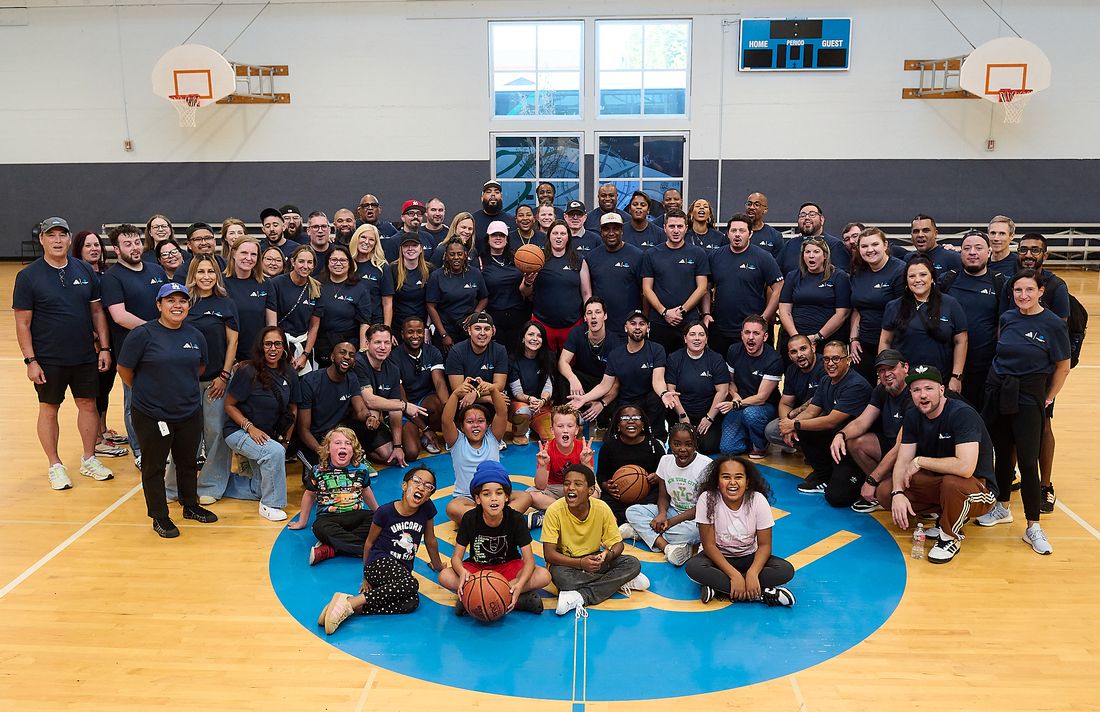
Community programs · Portland, OR
Why Us
We have already worked alongside organizations like yours.
We subtitled a film for a nonprofit so it could travel past the room it premiered in. We developed The Fab Lab, an original educational program, with a museum. We have carried university students on live sets and put their names in the credits.
Those engagements taught us something we did not expect: the organizations doing the most necessary work in this region are the ones with the least access to professional craft. Not because anyone excludes them — because nobody ever offered.
We are offering.
Start the Conversation
Tell us who your young people are. We will tell you what we can do.
No proposal, no commitment, no cost to find out. Thirty minutes and some honest questions about what your organization needs.
Joseph and Jeremy wrote those themselves. They are the most accurate description of this program on the site.
The Teaching Hospital · Economic Impact
What does one trained young professional do to a region?
We are gauging how each junior fellow and founding fellow contributes to arts, culture, and community in the Pacific Northwest. FPO Study
The Inquiry
An argument we make constantly, and intend to be held to.
This institute says, on nearly every page, that the arts are an economic engine rather than a decoration, and that training young professionals is therefore economic development rather than charity. That is a strong claim. It is also a measurable one, and we would rather be measured than believed.
So we are building the instrument. For every junior fellow and founding fellow who comes through the Teaching Hospital, we are tracking what happens next — where they land, what they make, who they employ, what they teach, and what stays in this region because they stayed in it. The methodology is refined with each cohort, because the first version of any instrument is wrong and the honest thing is to keep sharpening it in public.
What this page is not: a number we have already arrived at and are presenting as settled. There is no figure here yet. When there is one it will arrive with its method attached, including the parts of it that undercut us.
What it will become: a published economic impact study, with the arithmetic shown, the assumptions named, and the uncomfortable findings left in. Until then this page exists to say out loud that the study is being conducted, so that the claim on the homepage is a commitment rather than a flourish.
If you work in regional economic development, arts funding, or workforce research and you want to pull on this — or tell us the instrument is wrong — we would genuinely rather hear it now than after we publish.
You do not need permission. You need an application.
We are accepting applications for the Fall 2026 cohort. You do not need a finished portfolio, a film degree, or a connection here. You need to have made something and to want to get better at it.
The Application
Tell us who you are.
Online applications are not available yet. The fields below show what to include when you email fellows@thinkgms.com; entering them here will not send anything. Write like a person, not like a cover letter.
This is a design preview — the form isn't wired to a server yet. Until it is, write to fellows@thinkgms.com and tell us the same things.
Now Accepting
Fall 2026 cohort. Applications are rolling — there is no deadline, and there is no advantage to waiting. fellows@thinkgms.com Vancouver, WA & Portland, OR
What Happens Next
i.
A Managing Partner reads it. Not a screener, not a form filter — one of the six.
ii.
A reply within two weeks, either way. If it is a no, we will tell you why, because that is more useful than silence.
iii.
A conversation. Thirty minutes, no portfolio review, no trick questions. We mostly want to hear how you think about work you have already done.
iv.
If it is a fit, you start on a live engagement. Not a training exercise — real work, supervised, with your name in the credits.
What You Do Not Need
A film degree. A polished reel. Your own gear. A relative in the industry. Experience on a professional set. Confidence — most people who belong here did not feel qualified when they applied.
The Standing Offer
Nobody softens the standard for you. That is not a warning — it is the entire reason this is worth your year.
The Gallery
This is what the year actually looks like.
Sets, crews, long days, and the people who were there. Some of it is the machine working. Some of it is us enjoying ourselves on somebody else's time.
Six open inquiries, the methodology behind them, and the current events the Corps is following. Findings are published as they close — including the ones that do not support the thesis.
Open Inquiries
Six questions, currently under study.
Methodology
How an inquiry gets opened, and what happens to it.
i.
Selection
An inquiry opens when a question keeps recurring across unrelated engagements. Recurrence is the filter — one client's problem is a project; the same problem at four organizations is a research question.
ii.
Method
Work is conducted against live engagements rather than in the abstract. Findings are tested on real budgets, real deadlines, and real organizations, which is both the limitation and the point.
iii.
Publication
Summaries are published openly. Full methodology, figures, and recommendations are released to clients, who may also have an inquiry run against their own organization. Findings that fail are published as well.
Research Areas
Four standing programs.
Program 01
Information & Infrastructure
How organizations store, retrieve, secure, and pay for what they have already accumulated.
Program 02
Communication & Belief
What generates trust in a market where production cost has collapsed and attention has not.
Program 03
Creative Workforce
Whether supervised practice builds regional capacity faster than instruction, and what that is worth.
Program 04
Regional Creative Economy
The arts as economic infrastructure — jobs, retention, and the gravity that holds talent in a place.
What We're Thinking About
Not our research. The reading behind it.
Current events, reports, and arguments the Corps is following — flagged by the partner who brought it in, with a note on why it matters. Updated as things land.
Currently Reading·The Atlantic·August 2026·Flagged by Geff Zamor
The fertility decline is not a policy problem. It is a credibility problem.
Claudia Goldin’s argument, by way of The Atlantic: women are not declining to have children because incentives are too small. They are declining because they cannot be confident their partner will actually carry half of what follows. Cash and tax breaks do not fix that. Only behaviour does.
TheAtlantic
Every developed economy has tried paying people to have children. The countries where men do more at home are the ones where it worked.
Ideas · August 2026 On research by Claudia Goldin
The finding itself is demographic: across developed economies, fertility tracks the gap between what women and men actually do at home. Countries that modernised fastest — Japan, Italy, Greece — saw the steepest declines, because opportunity for women arrived far ahead of any change in household expectation. Where growth was slower and domestic norms moved with it, birth rates held up better.
The Institute’s Take
We are not a demographics practice, and we are not going to pretend this is about us. We are following it because it is the cleanest recent example of a problem that money could not solve and behaviour could — and that is the shape of nearly every problem organizations bring to this desk.
Governments spent a decade treating declining birth rates as a pricing question. Subsidies, credits, bonuses. The incentives were real and they largely did not work, because the thing being decided was never economic. It was a judgment about whether a specific person could be relied upon. No amount of money answers that question, and the campaigns built on the assumption that it would were answering a question nobody was asking.
That is a research failure before it is a policy failure. It is also the failure we are hired to prevent. An organization convinced its problem is awareness will buy awareness; if the actual problem is that nobody believes them, the spend produces nothing and the diagnosis survives, because the campaign is what gets audited and the question never does. Refining the question is not a preliminary step. It is the step.
There is a second reason it stays on the desk. Goldin’s mechanism is credible commitment — the difference between saying you will carry half and having demonstrated it. That is the same currency reputation-driven organizations trade in, and the same one our first inquiry is chasing: in a market where anyone can generate a convincing claim, the only signals left standing are the ones that cost something to produce.
Sets, crews, late nights, and the people who were there. Some of this is the machine working. Some of it is us enjoying ourselves on somebody else's time. Both belong in the record.
Click any frame to open it. Use the arrow keys to move through the set, or press escape to close.
Still Shooting
The archive keeps growing. So does the Corps.
Every engagement adds frames to this. If you want your organization somewhere in the next twenty-five years of it, the desk is open.